New!

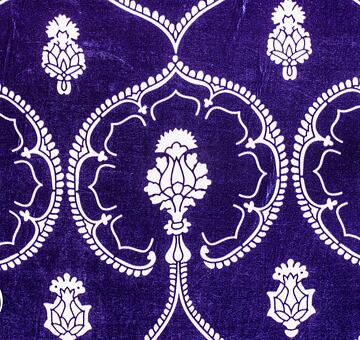
Palmette and lotus blossom – silk blend brocade, Renaissance pattern, yellow

Product code 103-06-1005

Lush brocade with Persian-inspired early Renaissance pattern, 16th century. Bold ornaments in red and genuine metal thread on a golden field. An elegant fabric for historical costuming, corsetry, formalwear, and interiors.

Read more
Basic parameters
Shade: gold with yellow
Period: 15-16. století
Style: Renaissance
Spanish
Italian
Persian
Medieval
Material: 60% silk, 40% metalická nit
Width (cm): 113 cm

The useable width you can actually sew with, not including selvedge.

Width (inches): 44 ″
Weight (mm): 21 mm
Weight (gsm): 90 gsm
Weight (oz): 2.7 oz
Pattern size: 57 cm
Pattern size (vertical): 83 cm
Minimum order: 0.2 m
Care:
Brand: Sartor Bohemia
Availability: limited edition
Manufacturer / Supplier Manufacturer
SARTOR BOHEMIA s.r.o.
Na Perstyne 1, 11000 Prague, Czech republic
info@sartorbohemia.com
www.sartorbohemia.com
Sartor
Bulk discount
1 - 9 m
129.00 $ / m
10 - 19 m
-5%
122.55 $ / m
20 and more
-10%
116.10 $ / m

in stock 47.5 m

129.00 $/m

129.00 $/m without VAT

m

Want to know what this fabric feels like?

Goods added to cart
Product description

Product description

This historical fabric with a pattern in red, gold, and silver on a golden field is based on an early Renaissance velvet from the 16th century. It is woven of natural silk with rayon and real metal thread. Nice for period clothing as well as contemporary styles and luxury interiors.

Origin and Pattern

This historical pattern originates in the luxury textile tradition of Renaissance Italy and Spain in the early 16th century. The design combines European weaving techniques with decorative influences from Persian art, which was extremely fashionable at the time.

Historical source

This fabric is based on a surviving panel of silk velvet dating from the early 16th century, probably of Venetian or Spanish origin, published by Sotheby’s.

Historical period and cultural context

As Persian and Ottoman luxury textiles flowed into Europe through Venice, Genoa, and the Iberian Peninsula in the 15th and 16th centuries, European workshops began to reinterpret the patterns to create their own silk velvets and brocades inspired by the Orient.

These luxury fabrics were intended mainly for

  • Aristocrats
  • Church dignitaries
  • Wealthy merchants
  • Royal courts

Similar textiles appear in portraits of the Renaissance aristocracy, in church vestments, and on curtains and interior decorations.

Symbolic meaning

The pattern here is a richly interwoven motif consisting of stylized palmettes, lotus flowers, and arabesques. The overall effect is monumental and decorative yet harmonious.

Palmettes

Dominating the motif is a stylized palmette drawn from the Persian tradition. In Islamic and Renaissance decor the palmette would have symbolized

  • Life
  • Plenty
  • Spiritual growth
  • Harmony and cultivation

Its regular repetition creates an endless ornament typical of Oriental and early Renaissance textiles.

Lotus flowers

Stylized lotus flowers among the palmettes are probably drawn from the Persian and Oriental decorative arts. In many Eastern cultures the lotus signifies

  • Purity
  • Spiritual renewal
  • Harmony
  • Nobility
  • Eternity

The lotus motif would have figured primarily on luxury textiles and objects intended for court or ceremonial use.

Arabesques

Interlaced tendrils and botanical motifs reference the esthetic of the infinite pattern from Islamic art.

Suggested uses

Luxury brocade and velvet of this type would have been a signifier of prestige and social standing. With its strong decor this brocade broadcasts the importance of its wearer, even when used in smaller details.

This silk blend brocade is well suited to demanding historical costumes, formal garments, film and theater projects, and luxury interiors.

A few uses for this historical brocade:

  • Historical costumes
  • Caftans and doublets
  • Gowns, corsets, bodices
  • Liturgical and ceremonial textiles
  • Curtains and decorative panels
  • Decorative pillows and interior accents
  • Boutique fashion

Living history and reenactment

This brocade is exceptionally well-suited for:

  • Renaissance Italy and Spain, 15th–16th centuries
  • Persian and Ottoman garments
  • Gowns à la Eleonore of Toledo
  • Characters of wealthy merchants and courtesans
  • Late Medieval and early Renaissance luxury interiors

👉 The strong decorative character of this fabric makes it especially useful wherever a costume or interior should convey luxury.

Film and theater

Advantages for film and theater costume design:

  • Strong historical esthetic
  • Strong signifier of luxury and power
  • Rich texture that lights well
  • Strong pattern, even from a distance
  • Broad application in European and Oriental scenes, late Middle Ages to early Renaissance

👉 This fabric looks great on camera – the burgundy design with interwoven metallic thread stands out against the light background and gives costumes depth even in low light.

👉 This brocade can also carry fantasy projects inspired by a Renaissance or Oriental esthetic.

Why choose historical fabrics from Sartor Bohemia

Our historical designs are developed with careful attention to the original sources, material integrity, and period-appropriate aesthetics. We focus on high-quality materials that perform not only visually, but also in construction and wear.

Our clients therefore know precisely what they are purchasing — and can create with confidence that the finished garment will meet both their expectations and historical standards.

Intellectual property

Please note that this design is the intellectual property of SARTOR BOHEMIA.

Fabric, sewing, and care

This historical brocade reproduction is a jacquard weave of natural silk, rayon, and metal thread coated in genuine gold. With its premium materials and heavier weight, this brocade is very sturdy yet pliable, soft, and breathable.

Sewing advice

For this brocade we recommend a lining made of natural fibers — ideally a silk lining or fine linen. For additional structure and stabilization, you may use silk organza or silk crêpeline.

Beauty in imperfection

This fabric is woven on an automated jacquard loom but the pattern is prepared by hand: first it is sketched on graph paper and then manually made into punch cards. For that reason, there may be slight irregularities in the weave. These tiny imperfections are not defects, but are a natural feature of hand crafting.

Care instructions

  • Because of the materials used in this fabric, natural silk and metallic threads, machine washing is not recommended.
  • Professional dry cleaning is advised.
  • If you risk hand washing, use lukewarm water and a delicate detergent for wool and silk; do not wring or squeeze dry; block dry on a flat surface.
  • Dry iron at low temperature from the reverse side, ideally with a pressing cloth.

FAQ

Do your historical reproductions ever repeat?

Rarely! We produce reproductions of historical fabrics as limited editions. We want to guarantee a certain authenticity to all owners of historical costumes and decorations. We recommend that you buy these fabrics while they are in stock, as this is the only way to secure them for your project aside from custom ordering.

What is a limited edition?

Limited editions are fabrics of exceptional quality or patterns that have been designed and produced exclusively under the Sartor brand. As a rule, they do not repeat and are therefore only available while supplies last. Don't miss your chance to own a true original.

Are your historical reproductions suitable for modern use?

Of course! Historical patterns are characterized by high-quality aesthetic workmanship with an emphasis on elegance and harmony, which make them timeless works of art. They are suitable for modern interiors, where they bring an element of originality (try a picture, a pillow). In fashion, they excel in simple, even minimalist, garments, handbags and other accessories.

Is your product assortment always the same?

Most of our fabrics are one-time offers that last until they are sold out. However, some more popular items are always restocked or can be ordered on request. As a rule, this applies to notions, where the selection is pretty consistent, but may also include some types of fabric. Look at the product's availability value – it shows whether the goods are available while supplies last, in the core inventory or in a seasonal collection.

What is a seasonal collection?

The goods in the seasonal collection come directly from our verified manufacturers. We change up the colors on offer from season to season but fabric quality is always constant. For large (wholesale) orders, colors that have been sold out can be reordered individually.

What is the smallest amount of fabric I can order?

The minimum fabric order is a length of 20 cm.

Do you accept orders by phone or email?

No. We only accept retail orders through the e-shop. This eliminates situations where someone else orders the last of an item while your order is still sitting in our inbox or lies jotted on a bit of paper by the phone. By purchasing online, you are putting an immediate hold on the product. Of course, you can always call or write to us if you need help making your selection.

Do you ship abroad?

Yes. We ship worldwide. The price of shipping is automatically calculated at checkout before payment after you select the country of delivery and the preferred carrier. If you do not find your country in the dropdown list, please contact us. You will find a rough overview of shipping costs in our shipping and payment terms.

When will my order be delivered?

The estimated delivery date with your selected carrier can be seen before payment is made at checkout. It is calculated as the time for processing and packing your order plus the time it takes the selected carrier to deliver to a specific destination – this can be from 2 days for delivery within the Czech Republic to a week for delivery outside the EU. Expect longer delivery times during big sales and holidays.

Goes well with  (9) Related articles  (7)

Related articles

Sewing room essentials

Sewing room essentials

21.06.2024 Need to know

10 must-haves for your sewing space: scissors, pins, needles, thread, and more. See our list.

Full article
Sewing machine needles explained

Sewing machine needles explained

20.06.2023 Need to know

Ever wondered about sewing machine needles? Don’t know what size to use on your project? Our sewing needle cheat sheet comes to the rescue!

Full article
Fabric weight explained

Fabric weight explained

28.04.2021 Need to know

Fabric weight is one of the key elements in any fabric description. It’s an indicator of what a cloth is actually made of and what it could be good for. In online fabric shops you’ll find it listed alongside textile content and width, in brick-and-mortar shops it’s on the sticker at the end of the bolt. So, what exactly does it tell you?

Full article
How to find a good dry cleaner

How to find a good dry cleaner

08.12.2020 Need to know

That silk dress was a real find, but – d’oh! – the tag says dry clean only. At a loss? Here are a few tips on finding a good cleaner. It’s easier than you may think and it’s certainly worth the effort. If you’ve been living in jeans and a t-shirt and this is your first foray into the world of professional cleaning, take a deep breath and read on. Levels of service and know-how can vary widely but a good dry cleaner can be worth their weight in gold. Choose wisely (we tell you how) and your clothes will thank you.

Full article
All about silk

All about silk

02.07.2020 Need to know

Silk is an absolute classic, sought after for its beauty and exquisite softness, shunned for its price tag and supposed frailty. But is natural silk really so expensive or so impractical? How many kinds of silk are out there? And what makes silk so utterly irresistible? Let us clear up some questions (and bust some myths) for one of nature’s most intriguing materials.

Full article
From cocoon to thread – How silk is made

From cocoon to thread – How silk is made

24.03.2020 Of interest

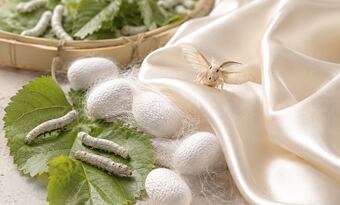
It’s common knowledge that silk is made from the snow-white cocoon of the mulberry silk moth. But how do we go from that tightly spun wad to a perfect, endless thread? The secret of silk production was closely guarded by the Chinese court for millennia and those who would talk faced death. Yet it turns out that all you need if you’d like to see how it works, is a cup of warm water...

Full article
Wheeling and dealing… in silk cocoons

Wheeling and dealing… in silk cocoons

21.02.2020 Of interest

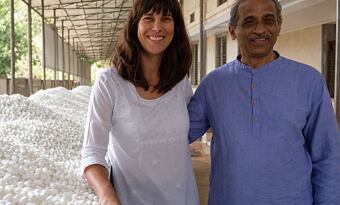
The hall explodes in frenzied activity as brokers rush to buy and sell. Deals are struck. Fortunes are made. But we’re not on Wall Street. And it’s not stocks and bonds trading hands… It’s silkworm cocoons. Welcome to the great cocoon market in Karnataka, where our Indian silks begin their journey to you.

Full article
sartor newsletter

By registering you agree to the processing of your personal data

News delivered straight to your inbox

Subscribe to our newsletter and stay up to date with everything important. We only send emails when we truly have something worth sharing – just as we would expect ourselves.

Got a question? A dilemma?

+420 777 511 114
support@sartorbohemia.com

Language

Currency