Product description
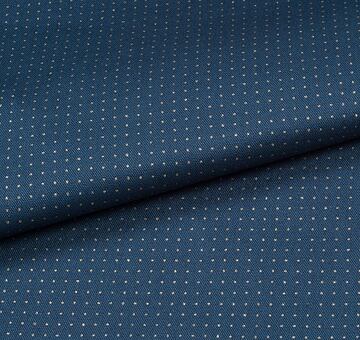
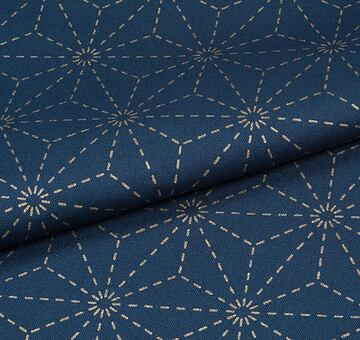
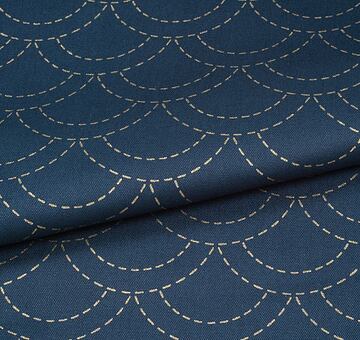
This special fabric for Japanese sashiko stitching projects has a printed pattern to guide your needle so you can get straight to sewing. Simply follow the pattern. When you’re finished working, the printed pattern washes out.
Seven treasures pattern “shippo tsunagi”
This fabric features the traditional seven treasures pattern, shippo-tsunagi. This ancient design was known in Japan long before sashiko itself evolved. The “seven treasures” referred to here are the seven precious metals and gemstones of Buddhism.
Made in Japan
Produced in Japan, this fabric is a premium, 100% cotton weave from Olympus, a trusted Japanese manufacturer of sashiko fabrics and notions.
What is sashiko?
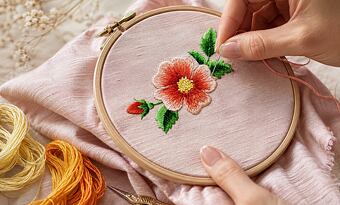
Sashiko is a traditional Japanese needlework technique originally intended simply for reinforcing and mending clothing. Over time an array of distinctly minimalist geometrical designs has evolved. In traditional sashiko patterns the needlework is done on indigo dyed deep blue fabric with special cotton sashiko thread, thicker than ordinary thread, that is a loose twist of several thinner strands. At first glance it resembles crochet thread or embroidery floss but is fundamentally different; both crochet thread and embroidery floss are twisted more tightly and floss is glossier and less sturdy. Naturally, you can try your hand at sashiko using any kind of thread, but for the right effect and an authentic look we recommend using sashiko thread. To work with this thread, you’ll need a sashiko needle or at least a fairly big needle with a large eye. Sashiko needles are longer and stronger, and sewing with them is much easier.
Care
Completed needlework pieces should be washed by hand in warm water (max 40°C). Dry in the shade. Iron on the cotton setting, with or without steam. If using indigo fabric, keep in mind that the color will bleed slightly, coloring white thread a pale blue (an effect that is considered desirable in traditional sashiko).