

44 Bridgerton dresses
28.03.2026
Of interest
Inspiration from the series for your own sewing.
Full article🛠️ We are currently experiencing a minor technical glitch and you cannot reach us by phone. Please reach out to us by email. Thank you!

Product code 103-06-1006
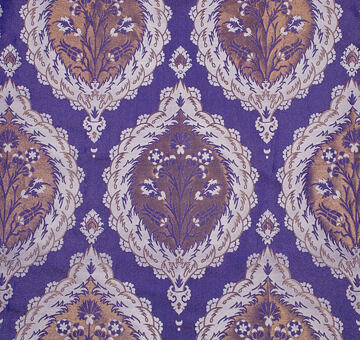
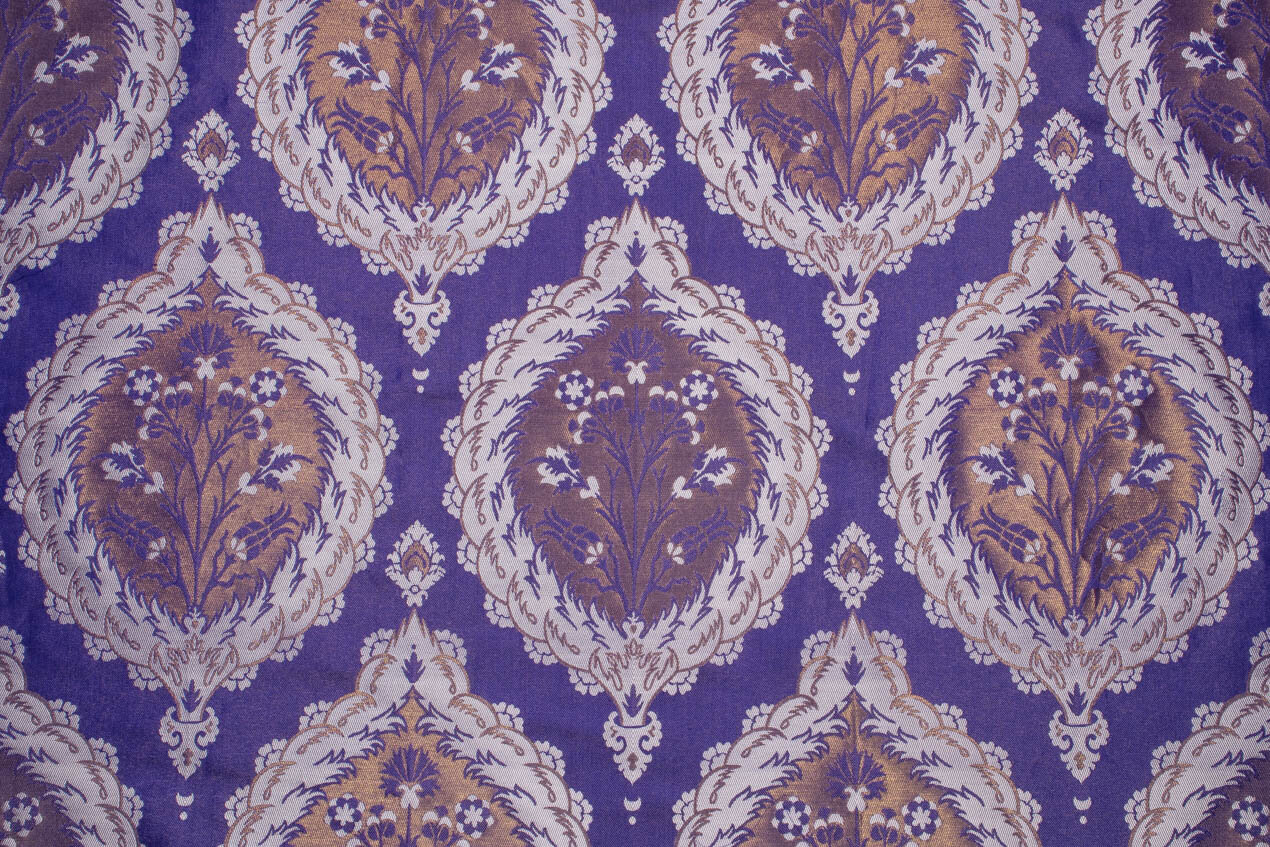
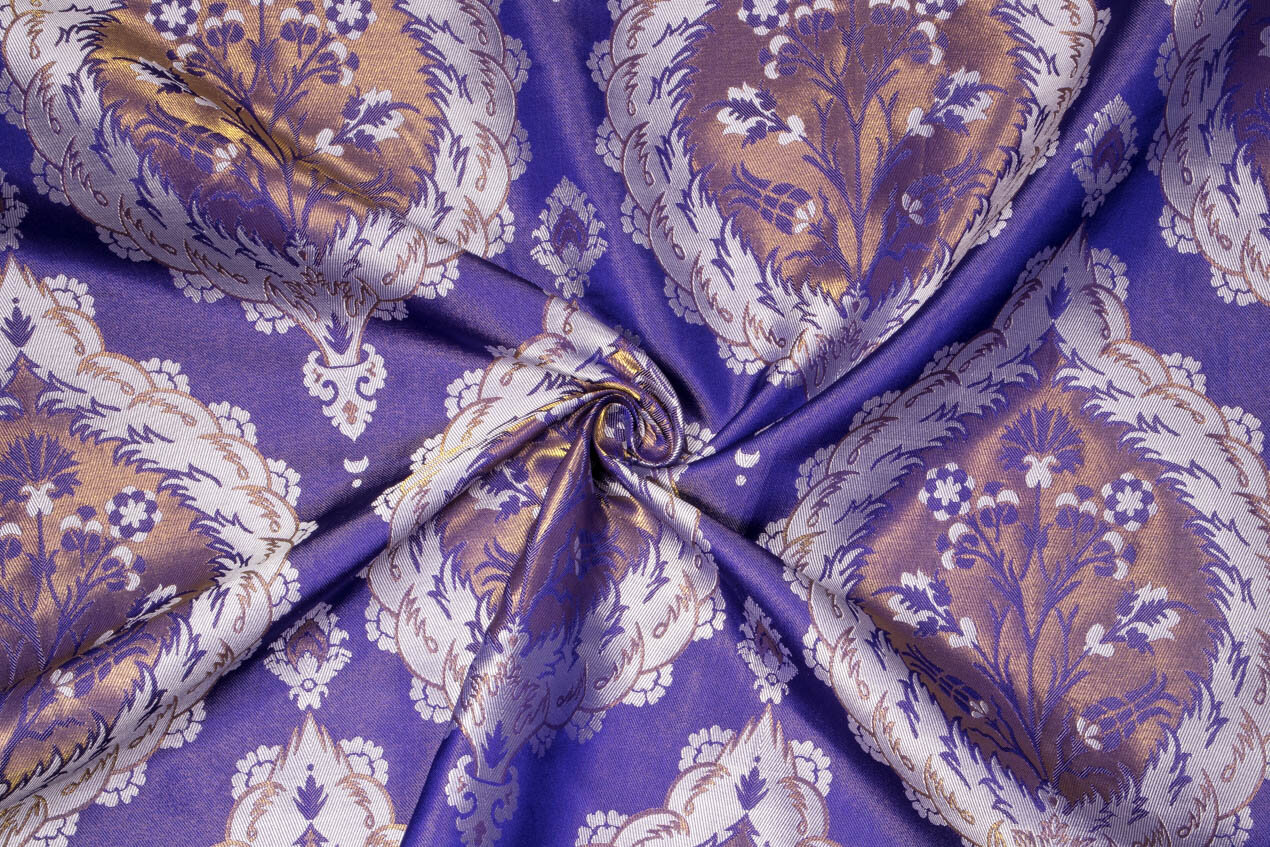
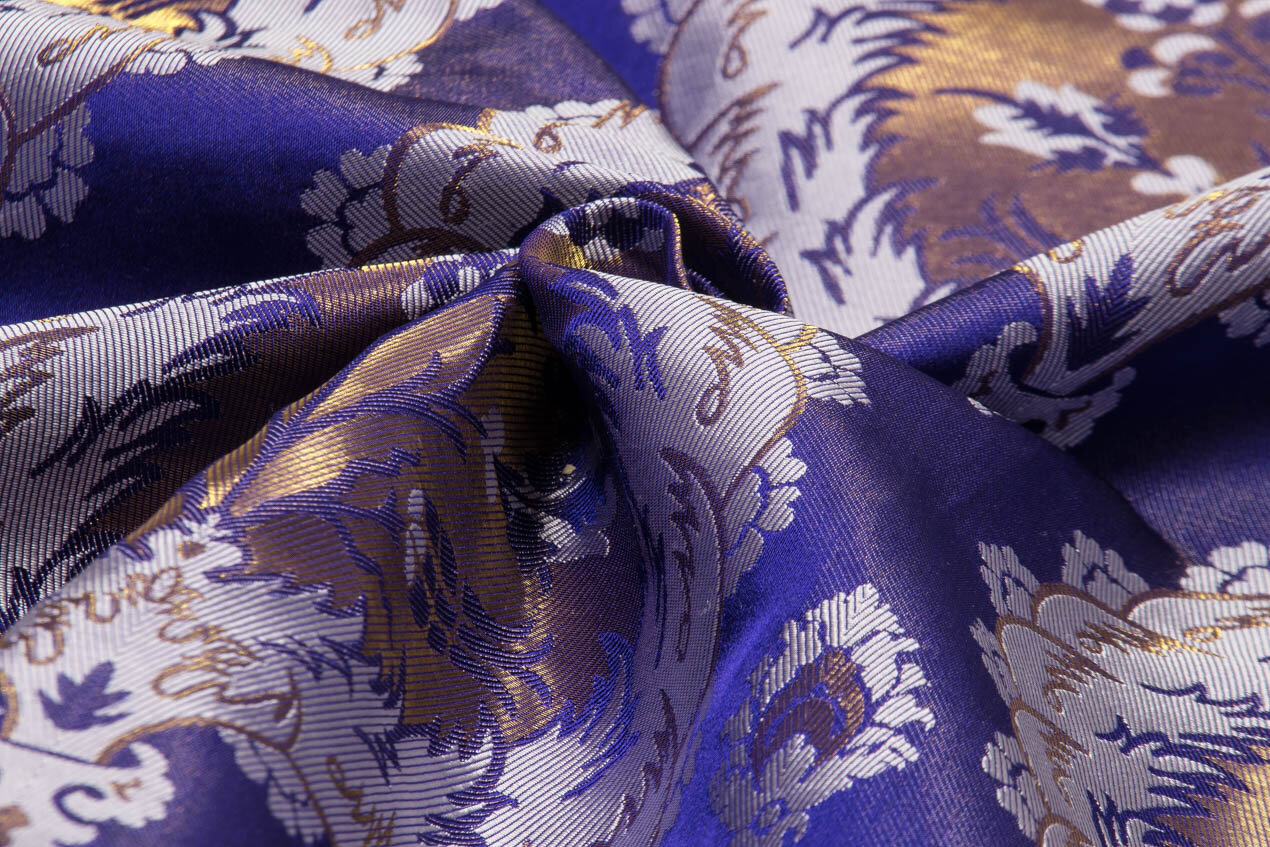
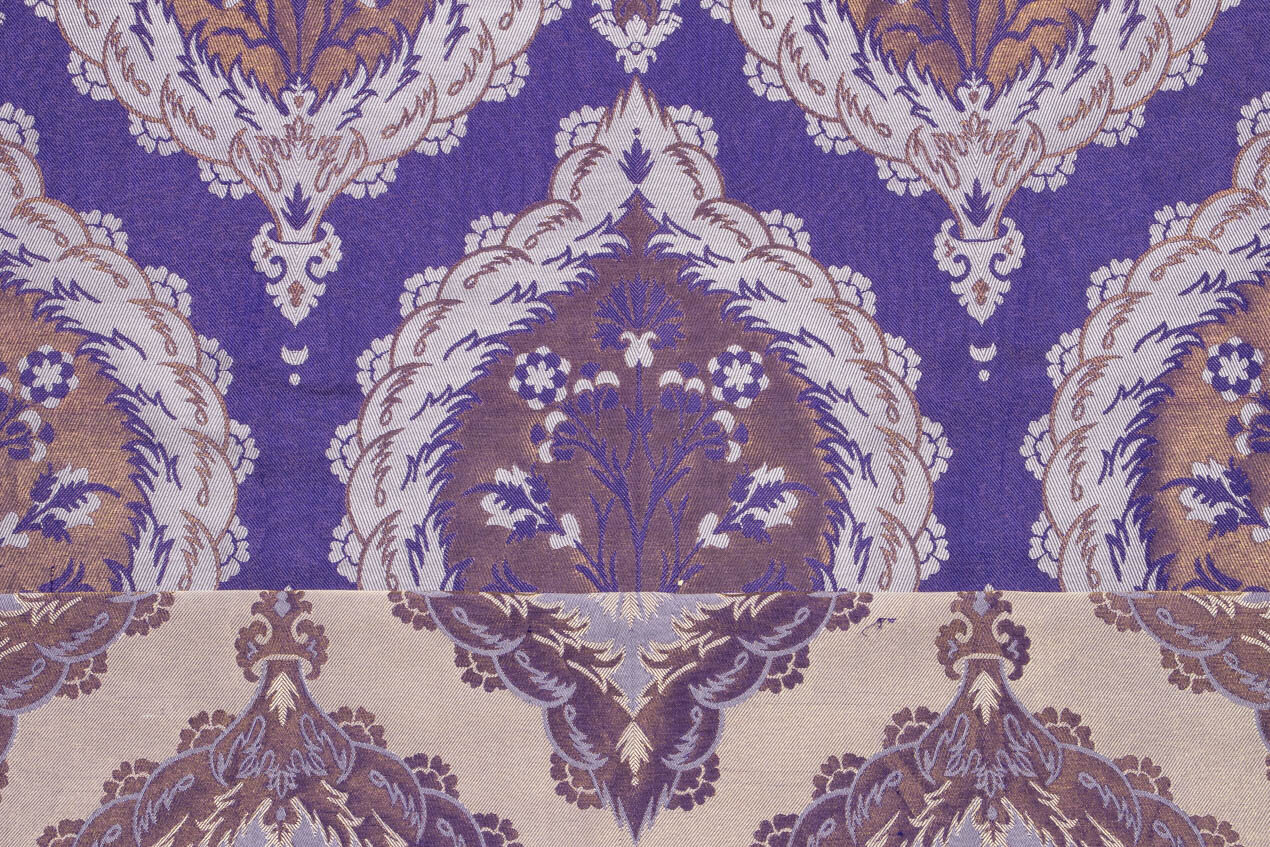
This silk brocade is inspired by a surviving Ottoman textile from the second half of the 16th century. Bold oval medallions framed by sweeping leaves and floral motifs stand out against a dark blue ground, reflecting the refined visual language of Ottoman court art at the height of its cultural development. An exceptional fabric not only for historically accurate costumes and decorative work, but also for creators seeking truly distinctive material for contemporary projects.
Read more| Shade: | blue and gold |
| Period: | 16th century |
| Style: |
Islamic Ottoman |
| Material: | 25% silk, 75% metallic thread |
| Width (cm): |
139 cm
The useable width you can actually sew with, not including selvedge. |
| Width (inches): | 55 ″ |
| Weight (mm): | 30 mm |
| Weight (gsm): | 130 gsm |
| Weight (oz): | 3.8 oz |
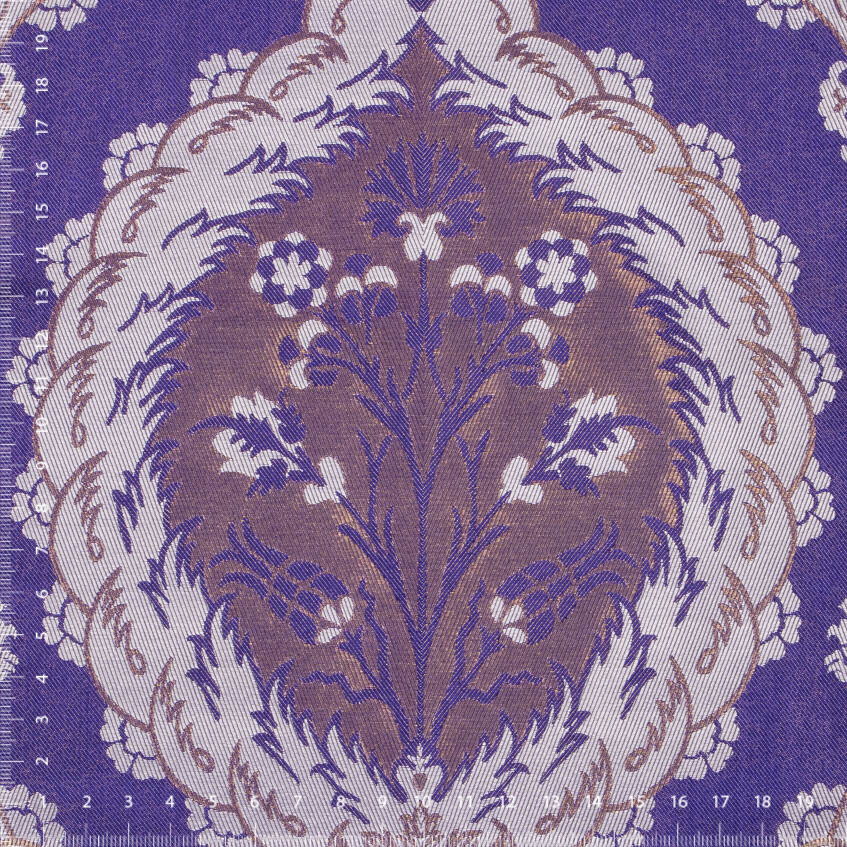
| Pattern size: | 22 cm |
| Pattern size (vertical): | 43 cm |
| Minimum order: | 0.2 m |
| Care: | |
| Brand: | Sartor Bohemia |
| Availability: | limited edition |
| Manufacturer / Supplier |
Manufacturer SARTOR BOHEMIA s.r.o. Na Perstyne 1, 11000 Prague, Czech republic info@sartorbohemia.com www.sartorbohemia.com Sartor |
in stock 56.7 m
This silk brocade is inspired by a surviving Ottoman textile from the second half of the 16th century. Bold oval medallions framed by sweeping leaves and floral motifs stand out against a dark blue ground, reflecting the refined visual language of Ottoman court art at the height of its cultural development.
An exceptional fabric not only for historically accurate costumes and decorative work, but also for creators seeking truly distinctive material for contemporary projects.
The original belongs to the group of luxurious Ottoman fabrics known as kemha — richly patterned silk lampas textiles in which metal-wrapped, often gilded threads were frequently incorporated.
The composition is built around large oval medallions whose outlines are formed by sweeping leaves, while stylized floral compositions fill their centers.
In developing this historical brocade, we drew inspiration from a remarkable Ottoman silk textile dating to the second half of the 16th century, now preserved in the Museo Nazionale del Bargello in Florence, Italy.
The surviving piece measures approximately 298 × 68 cm, preserving an unusually long section of the original fabric with several repeats of the design.
Historical descriptions identify a dark blue silk ground patterned with lighter silk threads and gilded metal-wrapped thread.
The exact production center of this particular textile has not been securely established. Typologically, however, it belongs to the finest tradition of Ottoman silk weaving, whose principal centers in the 16th century included Istanbul and Bursa.
The second half of the 16th century belongs to the high period of classical Ottoman art. Textiles, ceramics, bookbindings, manuscripts, and other luxury objects shared a sophisticated decorative vocabulary developed within and around the imperial court workshops.
One of its most distinctive elements was the saz style, characterised by long, sweeping, sharply serrated leaves. Its development at the Ottoman court is particularly associated with the artist Şahkulu, who worked in the court environment during the reign of Süleyman the Magnificent.
Designs developed by court artists were subsequently translated into many different media — ceramics, illuminated manuscripts, carpets, and luxurious woven silks.
Silks such as kemha were far more than decorative materials. They ranked among valuable prestige goods and played an important role in court dress, ceremony, diplomacy, and gift-giving.
Long, sweeping, serrated leaves are among the most characteristic elements of the Ottoman saz style.
They should not, however, be assigned a single fixed symbolic meaning. Their importance lies primarily in the artistic language of the Ottoman court, where natural inspiration was transformed into imaginative, almost fantastical vegetation with a strong sense of movement and rhythm.
In this textile, the saz leaves form the dramatic frames around the large medallions and define the character of the entire composition.
Large oval medallions was a popular composition in Ottoman decorative art. Related forms can also be found on book bindings, illuminated manuscripts, carpets, and other luxury objects.
Here the medallions are arranged in a staggered repeat, preventing the pattern from forming a static grid and instead creating a continuous visual rhythm across the fabric.
This monumental scale of pattern was particularly characteristic of prestigious Ottoman silks of the 16th century.
At the centre of each medallion is a stylized floral composition, reflecting the growing importance of garden and flower imagery in classical Ottoman art.
From the mid-16th century onwards, tulips, carnations, roses, hyacinths, and other stylized flowers became prominent elements of Ottoman design.
Luxury Ottoman silks such as kemha were prestigious materials associated primarily with the court and the upper levels of society.
They were used for kaftans and other ceremonial garments, as well as for luxurious furnishings and ceremonial textiles.
The original purpose of the particular Bargello textile has not been documented, so it cannot be stated with certainty whether it was intended for clothing or another prestigious application.
What is clear is that fabrics of this quality represented a visible expression of wealth, rank, and cultivated taste.
This historically inspired brocade is particularly well suited to ambitious costume projects, living history, reenactment, film, and theatre.
It is an excellent choice for prestigious historical garments, kaftans, coats, and cloaks, while the pattern can also be highly effective on smaller areas such as bodices, borders, pouches, or other luxury accessories.
Because of the scale of the medallions, we recommend careful pattern placement when cutting. On garments with a strong central axis, deciding in advance whether a medallion should be centered on the front or back can make a substantial difference to the finished result.
The fabric can also be used beautifully in luxurious contemporary interiors — for decorative cushions, upholstered details, wall panels, or other statement pieces.
This brocade is particularly suitable for:
For film and theatrical costume designers, this fabric offers:
Its monumental ornament also makes the brocade highly effective for fantasy costume and set design, especially where the aim is to draw on genuine historical textile traditions rather than a generic idea of the “Orient”.
Our historical designs are developed with careful attention to the original sources, material integrity, and period-appropriate aesthetics. We focus on high-quality materials that perform not only visually, but also in construction and wear.
Our clients therefore know precisely what they are purchasing — and can create with confidence that the finished garment will meet both their expectations and historical standards.
Please note that this design is the intellectual property of SARTOR BOHEMIA.
This historical brocade is a pure silk Jacquard weave with genuine metal threads. Premium natural materials give the fabric its refined appearance while keeping it pleasant to the touch, breathable, and sufficiently durable for demanding costume and decorative projects.
For additional structure in areas that need support, you may use silk organza or silk crêpeline.
Rarely! We produce reproductions of historical fabrics as limited editions. We want to guarantee a certain authenticity to all owners of historical costumes and decorations. We recommend that you buy these fabrics while they are in stock, as this is the only way to secure them for your project aside from custom ordering.
Limited editions are fabrics of exceptional quality or patterns that have been designed and produced exclusively under the Sartor brand. As a rule, they do not repeat and are therefore only available while supplies last. Don't miss your chance to own a true original.
Of course! Historical patterns are characterized by high-quality aesthetic workmanship with an emphasis on elegance and harmony, which make them timeless works of art. They are suitable for modern interiors, where they bring an element of originality (try a picture, a pillow). In fashion, they excel in simple, even minimalist, garments, handbags and other accessories.
The minimum fabric order is a length of 20 cm.
No. We only accept retail orders through the e-shop. This eliminates situations where someone else orders the last of an item while your order is still sitting in our inbox or lies jotted on a bit of paper by the phone. By purchasing online, you are putting an immediate hold on the product. Of course, you can always call or write to us if you need help making your selection.
Yes. We ship worldwide. The price of shipping is automatically calculated at checkout before payment after you select the country of delivery and the preferred carrier. If you do not find your country in the dropdown list, please contact us. You will find a rough overview of shipping costs in our shipping and payment terms.
The estimated delivery date with your selected carrier can be seen before payment is made at checkout. It is calculated as the time for processing and packing your order plus the time it takes the selected carrier to deliver to a specific destination – this can be from 2 days for delivery within the Czech Republic to a week for delivery outside the EU. Expect longer delivery times during big sales and holidays.

Inspiration from the series for your own sewing.
Full article
10 must-haves for your sewing space: scissors, pins, needles, thread, and more. See our list.
Full article
Did you know there’s more than one kind of natural silk? It’s true, and not only do different silk moths made different kinds of silk, there are also different types depending on the quality of the yarn itself and how it was made. Each kind of silk has its own characteristics that you should know if you plan to wear it. To make an educated choice it’s good to know the basics. So, here we go!
Full article
That silk dress was a real find, but – d’oh! – the tag says dry clean only. At a loss? Here are a few tips on finding a good cleaner. It’s easier than you may think and it’s certainly worth the effort. If you’ve been living in jeans and a t-shirt and this is your first foray into the world of professional cleaning, take a deep breath and read on. Levels of service and know-how can vary widely but a good dry cleaner can be worth their weight in gold. Choose wisely (we tell you how) and your clothes will thank you.
Full article
The hall explodes in frenzied activity as brokers rush to buy and sell. Deals are struck. Fortunes are made. But we’re not on Wall Street. And it’s not stocks and bonds trading hands… It’s silkworm cocoons. Welcome to the great cocoon market in Karnataka, where our Indian silks begin their journey to you.
Full articleExclusively manufactured in limited runs
We reconstruct authentic patterns from historical textile fragments
Faithful reproduction of patterns in authentic materials and colors
We personally select our fabrics and know exactly where they come from

By registering you agree to the processing of your personal data
Subscribe to our newsletter and stay up to date with everything important. We only send emails when we truly have something worth sharing – just as we would expect ourselves.
Copyright © 2011 - 2026 Sartor Bohemia - All rights reserved
In business since wpj
How to put an item on hold for in-store pickup:
How to order sample swatches of fabric
or