Sewing machine needles explained
Ever wondered about sewing machine needles? Don’t know what size to use on your project? Our sewing needle cheat sheet comes to the rescue!
Full article🛠️ We are currently experiencing a minor technical glitch and you cannot reach us by phone. Please reach out to us by email. Thank you!
Product code 150-55-0003-R (1)
Cotton plain-weave fabric dyed with natural indigo. Perfect for clothing, interior decor, and crafts such as Japanese sashiko stitching.
Read more| Shade: | indigo blue |
| Material: | 100% organic cotton |
| Width (cm): |
144 cm
The useable width you can actually sew with, not including selvedge. |
| Weight (gsm): | 116 gsm |
| Care: | |
| Availability: | limited edition |
on order
Alternative products in the category Cotton:
This perfect dark blue organic cotton fabric gets its deep blue color from natural indigo, a traditional plant-based dye that has been used for thousands of years by cultures all over the world.
This fabric is made of GOTS-certified organic cotton, which guarantees responsible production from the cultivation process through fabric finishing.
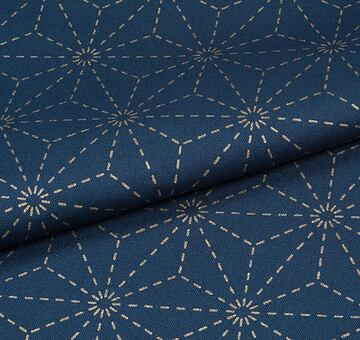
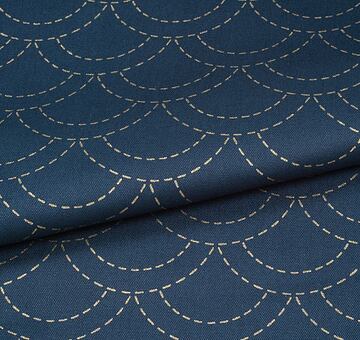
Indigo fabric like this one has long been used in Japan for sashiko stitching, a traditional craft with humble origins that has gained a growing following in recent years. The intricate, geometrical sashiko patterns were simply an artful way to reinforce and mend clothing. In traditional sashiko patterns the needlework is done with white thread on indigo fabric, though today sashiko mending may incorporate other colors too. Thicker than ordinary cotton thread, sashiko thread requires the use of a special sashiko needle.
Naturally, this indigo cotton fabric lends itself to a broad range of other uses too. It is beautiful for sewing clothes, from pants and skirts to dresses and tops. It is great in the interior, where it can be used for pillows and other accessories. If you enjoy needlework, try adding sashiko patterns or something of your own design. The dark blue combines well with white, red, light blue, yellow, and natural tones.
While this indigo dye is fairly stable – it has been applied professionally with proven techniques – you should always keep in mind that the color will bleed slightly. With indigo garments, treat them as you would a new pair of jeans – wash with similar colors in tepid water without bleach, dry in the shade to prevent fading. If you do sashiko stitching on this fabric with white thread, it will take on some of the blue with the first wash. With sashiko this effect is expected and the “softening” of the bright white thread is considered desirable. If you don’t want this effect for your project, avoid combining indigo-dyed fabric with white (e.g. white collars and cuffs).
Wash to shrink before sewing. The fabric may be slightly starchy and stiff, and may have a slight gloss, but this will vanish with the first wash.
Natural indigo dye comes from the indigo plant, which grows in subtropical regions. Indigo is used in many world cultures, with long traditions in Japan, India, and Africa. Jeans were originally dyed with natural indigo back in the early days. Dying with indigo is a sort of alchemy, so it’s best to leave it up to an expert.
Machine wash 30°C. Iron on the cotton setting, with or without steam. The color on this fabric with bleed slightly, wash with like colors. If you plan to embroider this fabric using white thread, we recommend hand washing, as the manufacturer recommends, in soapy water and rinsing thoroughly. Dry in the shade.
Most of our fabrics are one-time offers that last until they are sold out. However, some more popular items are always restocked or can be ordered on request. As a rule, this applies to notions, where the selection is pretty consistent, but may also include some types of fabric. Look at the product's availability value – it shows whether the goods are available while supplies last, in the core inventory or in a seasonal collection.
The goods in the seasonal collection come directly from our verified manufacturers. We change up the colors on offer from season to season but fabric quality is always constant. For large (wholesale) orders, colors that have been sold out can be reordered individually.
The minimum fabric order is a length of 20 cm.
No. We only accept retail orders through the e-shop. This eliminates situations where someone else orders the last of an item while your order is still sitting in our inbox or lies jotted on a bit of paper by the phone. By purchasing online, you are putting an immediate hold on the product. Of course, you can always call or write to us if you need help making your selection.
Yes. We ship worldwide. The price of shipping is automatically calculated at checkout before payment after you select the country of delivery and the preferred carrier. If you do not find your country in the dropdown list, please contact us. You will find a rough overview of shipping costs in our shipping and payment terms.
The estimated delivery date with your selected carrier can be seen before payment is made at checkout. It is calculated as the time for processing and packing your order plus the time it takes the selected carrier to deliver to a specific destination – this can be from 2 days for delivery within the Czech Republic to a week for delivery outside the EU. Expect longer delivery times during big sales and holidays.
Ever wondered about sewing machine needles? Don’t know what size to use on your project? Our sewing needle cheat sheet comes to the rescue!
Full article
Fabric weight is one of the key elements in any fabric description. It’s an indicator of what a cloth is actually made of and what it could be good for. In online fabric shops you’ll find it listed alongside textile content and width, in brick-and-mortar shops it’s on the sticker at the end of the bolt. So, what exactly does it tell you?
Full article
That silk dress was a real find, but – d’oh! – the tag says dry clean only. At a loss? Here are a few tips on finding a good cleaner. It’s easier than you may think and it’s certainly worth the effort. If you’ve been living in jeans and a t-shirt and this is your first foray into the world of professional cleaning, take a deep breath and read on. Levels of service and know-how can vary widely but a good dry cleaner can be worth their weight in gold. Choose wisely (we tell you how) and your clothes will thank you.
Full article
The circle skirt is a classic that will make a great addition to any summer wardrobe, and with this “sartorial” (eh-hem, Sartor + tutorial ;-) absolutely anyone can make one. Our detailed, two-part tutorial takes you through it step by step. In part one we outlined how to make your pattern and calculate fabric use. Now we’ll get down to the nitty gritty of cutting and sewing the skirt. After all the theory in part one, the hands-on work in part two will be a cake walk. Let’s get sewing!
Full article
Ever wonder what those funny symbols on care labels mean? The washtub, the triangle, that little box with a circle inside? Get your decoder rings ready! This overview gives you the key to decipher what the manufacturer is trying to say. Now you’ll always know just how to wash, dry, and press your clothes. Never be vexed by the hieroglyphs on a care tag again!
Full article
How to make a circle skirt pattern for full, three-quarter, and half circle skirts and tips for fabrics and effects.
Full article
How two sisters (that's us – Marcela and Zuzka) came together to make Sartor happen. Here's how it all started...
Full articleCopyright © 2011 - 2026 Sartor Bohemia - All rights reserved
In business since wpj
How to put an item on hold for in-store pickup:
How to order sample swatches of fabric
or