🛠️ We are currently experiencing a minor technical glitch and you cannot reach us by phone. Please reach out to us by email. Thank you!

Discount 30% Remnant

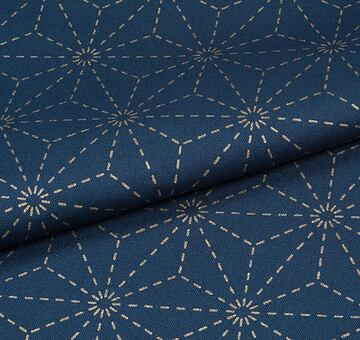
Cotton sashiko fabric with wash-out waves pattern, indigo blue, 0.8m

Product code 150-56-0003-R (3)

Cotton fabric in indigo with wash-out waves pattern especially for Japanese sashiko stitching.

Read more
Basic parameters
Shade: indigo blue
Material: 100% cotton
Width (cm): 112 cm

The useable width you can actually sew with, not including selvedge.

Weight (mm): 42 mm
Weight (gsm): 182 gsm
Care:
Brand: Olympus
Availability: seasonal collection
Manufacturer / Supplier Manufacturer
SARTOR BOHEMIA s.r.o.
Na Perstyne 1, 11000 Prague, Czech republic
info@sartorbohemia.com
www.sartorbohemia.com
Sartor Bohemia

on order

This product is out of stock for the foreseeable future.

Alternative products in the category Sashiko fabric:

Product description

Product description

This special fabric for Japanese sashiko stitching projects has a printed pattern to guide your needle so you can get straight to sewing. Simply follow the pattern. When you’re finished working, the printed pattern washes out.

Waves pattern “seikaiha”

This fabric features the traditional waves pattern, seikaiha. This pattern is frequently found in Japanese architecture, ceramics, fashion, and in modern graphic design. On old maps, the waves indicated the sea.

Made in Japan

Produced in Japan, this fabric is a premium, 100% cotton weave from Olympus, a trusted Japanese manufacturer of sashiko fabrics and notions.

What is sashiko?

Sashiko is a traditional Japanese needlework technique originally intended simply for reinforcing and mending clothing. Over time an array of distinctly minimalist geometrical designs has evolved. In traditional sashiko patterns the needlework is done on indigo dyed deep blue fabric with special cotton sashiko thread, thicker than ordinary thread, that is a loose twist of several thinner strands. At first glance it resembles crochet thread or embroidery floss but is fundamentally different; both crochet thread and embroidery floss are twisted more tightly and floss is glossier and less sturdy. Naturally, you can try your hand at sashiko using any kind of thread, but for the right effect and an authentic look we recommend using sashiko thread. To work with this thread, you’ll need a sashiko needle or at least a fairly big needle with a large eye. Sashiko needles are longer and stronger, and sewing with them is much easier.

Care

Completed needlework pieces should be washed by hand in warm water (max 40°C). Dry in the shade. Iron on the cotton setting, with or without steam. If using indigo fabric, keep in mind that the color will bleed slightly, coloring white thread a pale blue (an effect that is considered desirable in traditional sashiko).

Goes well with  (5) Related articles  (12)

Related articles

Needle painting – silk embroidery tutorial

Needle painting – silk embroidery tutorial

Silk embroidery is a small luxury you can afford. Try it with our beginner tutorial and see what you need to get started.

Full article
Sewing machine needles explained

Sewing machine needles explained

20.06.2023 Need to know

Ever wondered about sewing machine needles? Don’t know what size to use on your project? Our sewing needle cheat sheet comes to the rescue!

Full article
Sashiko, the Japanese art of mending

Sashiko, the Japanese art of mending

Neat white stitches on a field of blue. Perfect, pleasing, simply geometrical. Discover the Japanese mending technique turned art form known as sashiko.

Full article
Green, sustainable, safe – Understanding textile certificates

Green, sustainable, safe – Understanding textile certificates

23.05.2023 Need to know

How can you tell if a given fabric is organic? Safe for sensitive skin? That it’s not the product of child labor? These things matter, and the answers are usually at your fingertips. Just like food or cosmetics, fabrics have their own certifications for sustainability and fair trade that can help you make an informed decision. You just need to recognize what the tag is telling you.

Full article
Cheat sheet – Types of cotton fabrics

Cheat sheet – Types of cotton fabrics

29.07.2022 Need to know

How well do you know your cotton fabrics? Would that dress be better in batiste, lawn, or muslin? Cotton is more than t-shirts and quilting squares. It comes in a whole range of great options, many of which you’ll find in stock here at Sartor. This little glossary gives you the low-down on the usual suspects.

Full article
All about cotton

All about cotton

11.05.2022 Need to know

Let’s talk about cotton. It’s the natural fiber we all take for granted, but just how well do you know it? Can you tell a first-rate cotton from a cheap throwaway? And what makes the difference?

Full article
How to make curtains

How to make curtains

Restart your interior with new curtains. Our step-by-step tutorial shows 4 easy styles anyone can sew, whether you’ve just moved in or have a serious case of cabin fever and absolutely need to make a change. This tutorial shows you how to make simple curtain panels for the 4 most popular hanging options – ring clips, rod pocket, curtain hooks, and tabs. Treat your windows to a new look in linen or silk from our large selection. Let’s get sewing.

Full article
Fabric weight explained

Fabric weight explained

28.04.2021 Need to know

Fabric weight is one of the key elements in any fabric description. It’s an indicator of what a cloth is actually made of and what it could be good for. In online fabric shops you’ll find it listed alongside textile content and width, in brick-and-mortar shops it’s on the sticker at the end of the bolt. So, what exactly does it tell you?

Full article
How to make a circle skirt: Part 2 – Sewing

How to make a circle skirt: Part 2 – Sewing

The circle skirt is a classic that will make a great addition to any summer wardrobe, and with this “sartorial” (eh-hem, Sartor + tutorial ;-) absolutely anyone can make one. Our detailed, two-part tutorial takes you through it step by step. In part one we outlined how to make your pattern and calculate fabric use. Now we’ll get down to the nitty gritty of cutting and sewing the skirt. After all the theory in part one, the hands-on work in part two will be a cake walk. Let’s get sewing!

Full article
How to read laundry symbols

How to read laundry symbols

12.05.2020 Need to know

Ever wonder what those funny symbols on care labels mean? The washtub, the triangle, that little box with a circle inside? Get your decoder rings ready! This overview gives you the key to decipher what the manufacturer is trying to say. Now you’ll always know just how to wash, dry, and press your clothes. Never be vexed by the hieroglyphs on a care tag again!

Full article
How to make a circle skirt: Part 1 – pattern and cutting

How to make a circle skirt: Part 1 – pattern and cutting

How to make a circle skirt pattern for full, three-quarter, and half circle skirts and tips for fabrics and effects.

Full article
Make your own face mask

Make your own face mask

We have put together step-by-step guide on how to sew a face mask. And not just any face mask. This is no pleated rectangle, but a stylish, tailored face protector, that you can wear proudly. If you’ve got a scrap of Sartor brocade lying around, all the better.

Full article

This product is in the categories

Japanese sashiko fabric
sartor newsletter

By registering you agree to the processing of your personal data

News delivered straight to your inbox

Subscribe to our newsletter and stay up to date with everything important. We only send emails when we truly have something worth sharing – just as we would expect ourselves.

Got a question? A dilemma?

+420 777 511 114
support@sartorbohemia.com

Language

Currency